


CREMATION BURIALS
The tradition of cremation taking root at the dawn of the state
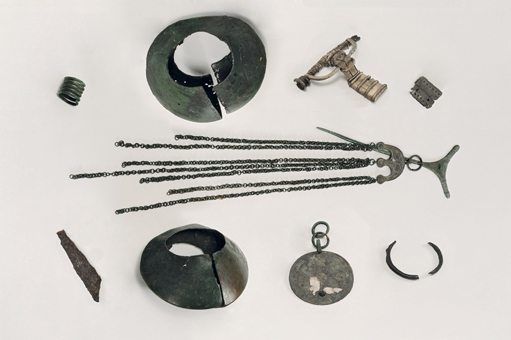
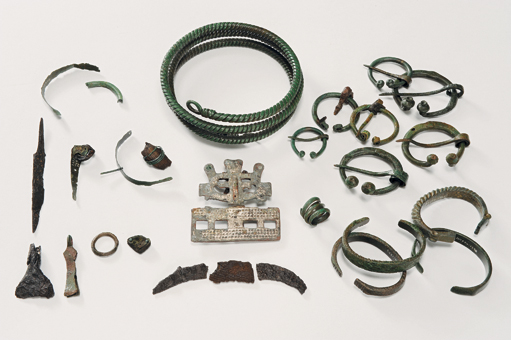

As you have already seen on the ground floor, the custom of cremating remains was already widespread in these lands before the Common Era. Later, this tradition was observed at different times by different communities, and in East Lithuania, cremation was possibly adopted from the east, perhaps even from the territory of the Dnieper River. However, cremation as the main burial practice began to take root approximately a thousand years ago. This tradition was adopted from the Prussians who lived in the south-west. During a period of several hundred years, it spread among all the Baltic tribes, though each of them had unique burial customs. These were the burial customs that the first carriers of Christianity found in Lithuania.
In this authentic 11th century grave of a Curonian soldier, we see a large number of surviving grave contents. Most likely the deceased was nicely dressed and adorned for the funerary rituals, and then burned in a huge pyre thus freeing his soul and accompanying it to the other world. Unlike what we may expect, at that time the remains were sometimes put in coffins, more often in pits—and urns were used in very rare cases.