


THE TIMES OF URN BURIALS
Funerary customs in the Bronze Age

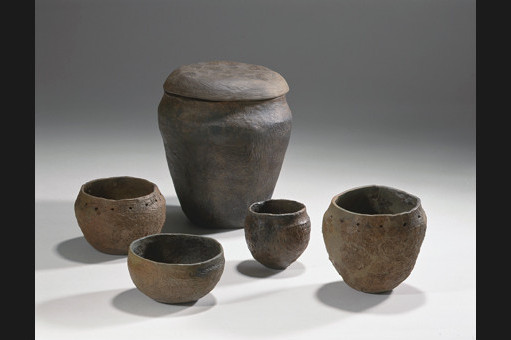
Archaeologists assert that new times arrived in the territory of Lithuania along with metals not only by judging from several casting moulds or brass pins. People’s daily lives, the perception of their surrounding world and even their broader world outlook underwent a distinct transformation. In the Bronze Age, burial practices changed completely: the burial of uncremated remains gave way to cremation. It is hypothesized that it was not merely a period of change within local communities, but that all these innovations were most likely brought by newcomers from other lands. Accompanied by various rituals, the dead were burned and their remains were collected in urns or pits, which were encircled with stones, thus symbolically protecting the grave. Sometimes a grave was deepened by placing the urn into the ground, and sometimes a small mound was built on the grave. This marks the appearance of the first tumuli—burial monuments used until the end of the Iron Age.